ti communication – a successful year of intercultural support within the PAM project
31. August 2026
Just over a year ago, we began running intercultural awareness seminars for small and medium-sized enterprises in Germany on behalf...


Attract international talent. Take on Responsibility.
12. August 2026Attract international talent. Take on Responsibility.
12. August 2026Just over a year ago, we began running intercultural awareness seminars for small and medium-sized enterprises in Germany on behalf of the German Society for International Cooperation (GIZ). The training sessions form part of the PAM project – Partnerships for Development-Oriented Training and Labour Migration – which is commissioned by the Federal Ministry for Economic Cooperation and Development (BMZ) and implemented by GIZ.
Just over a year ago, we began running intercultural awareness seminars for small and medium-sized enterprises in Germany on behalf of the German Society for International Cooperation (GIZ). The training sessions form part of the PAM project – Partnerships for Development-Oriented Training and Labour Migration – which is commissioned by the Federal Ministry for Economic Cooperation and Development (BMZ) and implemented by GIZ.
The project has several key objectives. On the one hand, it helps German companies to recruit qualified apprentices and skilled workers from the partner countries – Ecuador, Vietnam and Jordan – and thus tackle the shortage of skilled labour. On the other hand, it promotes regular and fair channels for international training and labour migration and strengthens cooperation between the participating countries. For us as intercultural advisers, one aspect is of particular importance: helping people to understand one another better.
Whilst the future employees are carefully selected in their home countries and prepared for their stay in Germany, we support the host companies on their journey towards a successful collaboration. After all, integration does not begin on the first day at work. It begins with openness, mutual understanding and a willingness to question one’s own perspective.
Our seminars rarely focus on major cultural studies theories. Much more often, we address the issues that actually concern HR managers, trainers or line managers.
For our EXPERT Arne Augustini, it is these and similar questions that repeatedly take centre stage in his sessions as part of the PAM project: How do I welcome a new colleague from Jordan? What role does religion play in day-to-day working life? Do I need to take specific dietary requirements into account? How do I phrase criticism in a way that is motivating whilst remaining respectful? How can we successfully integrate new colleagues into existing teams quickly?
At first glance, these questions may seem mundane. In practice, however, they often determine whether new colleagues feel welcome and whether a good start leads to a trusting working relationship. It is not uncommon for it to be precisely these seemingly minor moments in everyday working life that make all the difference to the success of the initiative.
A situation from one of the sessions might illustrate this more clearly. One participant is responsible for looking after the trainees and, where necessary, also helps them find accommodation, usually in mixed-gender shared flats. A new trainee from Jordan had already expressed her concerns beforehand about living in a shared flat. The participant is wondering how best to handle this. On the one hand, there are no specific requests; on the other hand, she also wants to act in a culturally sensitive manner. In discussion with me and the other participants – some of whom already have their own experience with trainees from other cultures – we are able to develop a roadmap and a sort of conversation guide for the person asking the question. During the discussion, we come up with an initial alternative arrangement: staying in the flat of an acquaintance who is currently studying abroad, so that the new trainee has a suitable place to live for the time being. This gives us a little more time to find a permanent solution. The new colleague’s wishes are respected and her culturally-influenced concerns are taken seriously. With the necessary time and a period to settle in, trust can now be built and a sustainable solution found together.


Photo: © PAM/GIZ
Photo: © PAM/GIZ
One insight has been repeatedly confirmed over the past few months: professional qualifications alone are not enough. Successful collaboration arises when people are prepared to reflect on their own perspectives and to accept other points of view.
Each of us views the world through our own cultural lens. Our values, communication patterns and expectations seem self-evident to us because we have grown up with them. When different cultural backgrounds come into contact, misunderstandings can easily arise. However, these are not a sign that anyone is doing anything wrong. They are a normal part of intercultural encounters.
This is precisely where intercultural awareness comes in. We do not impart rigid rules of behaviour or offer simple solutions. Rather, we raise awareness of why people communicate differently, make decisions or formulate expectations in different ways. We discuss topics such as communication behaviour, relationship orientation, perceptions of time, hierarchies and tolerance of ambiguity using specific situations from everyday working life. Our aim is to give participants greater confidence in their actions and to encourage them to remain curious, ask questions and clarify misunderstandings at an early stage.
A particular added value of the seminars lies in the exchange between companies. The online seminars bring together organisations from different regions of Germany and from various sectors. Some already have many years’ experience of working with international teams, whilst others are facing the challenge of supporting trainees or skilled workers from a different cultural background for the first time.
It is precisely this diversity that makes the events particularly valuable. Companies learn not only from our input, but also from one another. Practical experiences, successful examples and even openly discussed uncertainties enrich the seminar experience.
What particularly impressed us throughout the entire seminar series was the great openness of the German companies. Very few arrive expecting to already know all the answers. Rather, they want to understand, ask questions and make their new colleagues’ start in Germany as smooth as possible. At the same time, they recognise that the new employees are also willing to embrace their new working and living environment. Integration is therefore not a one-sided process of adaptation, but succeeds where both sides are willing to learn from one another.

Photo: © PAM/GIZ
The past few months have shown us once again that successful migration for training and work involves far more than simply placing qualified skilled workers and trainees. What is crucial are people who are prepared to listen to one another, ask questions and view differences not as obstacles but as opportunities.
The GIZ PAM project creates an excellent framework for this. The intercultural seminars are a key component of GIZ’s comprehensive approach. They provide a space for reflection, exchange and mutual understanding, and help to dispel uncertainties before they turn into misunderstandings.
We are delighted to be part of this project and to support companies on this journey. Every successful integration demonstrates once again that cultural diversity is not a risk, but an asset. Where people treat one another with respect, curiosity and openness, the foundations are laid for successful collaboration and long-term partnerships.

Author: Arne Augustini
EXPERT at ti communication specialises in Jordan and more.





Related posts

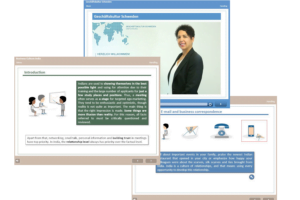
With our more than 30 innovative e-learning courses to date, you’ll become fit for intercultural business situations. You and your employees control your own learning process – just the way you need it: Where, when and for as long as you like! Become familiar with the most important cultural business peculiarities of a country, in order to “survive” intercultural business situations.
In contrast to the traditional waterfall method of change management, the agile route assumes that change is possible everywhere in the system. Along this route, teams and their development are especially important as sites for change. In this regard, learning nuggets represent a significant component to agile and thus autonomous learning. Short videos, brief study units, our Cultural Navigator as prework, e-learning sessions, topic-specific apps, guided lunch & learn units or numerous other flexible and spontaneously employable tools can be used as an alternate or enhancement to various topics. You will find several learning nuggets in our portfolio. In addition, we delight in the chance to develop new ones with you, in order to structure agile and thus sustainable learning in your enterprise.
We’d be happy to take the time to tell you about our learning nuggets or develop some with you.
In our workshops, you can develop your goals, spheres of activity and strategies with our guidance. Our moderators provide a supportive atmosphere and lend a temporal and content-based structure to your topics. That means you can work out your topics quickly and in a practical and target-oriented manner. The expertise of each individual team member is the hub of this activity. We make use of this expertise through methods in which cooperative work is supported. The narrow focus on one specific topic in a precisely defined time period enables concentrated and success-oriented work.
Get in touch with us, and we’ll develop the right workshop for your objectives.
Most of the learning process – studies cite approximately 70% - happens during the normal work day. Self-directed learning thus becomes the most important component of learning in an enterprise. In order to do justice to this circumstance, there is no way around moving from “prepackaged learning” to agile learning formats. This modern approach can be organized very well with several combinable tools and methods. Learning thus becomes sustainable and is no longer reduced to the simple memorization of facts. ti communication has always viewed training as a part of a process and not as a singular event. Now we are even greater advocates than ever of developing the space and opportunities for learners in an enterprise to educate themselves. We are happy to advise HR and PE staff along this path and ready to support teams and managers with concrete learning nuggets, tools, e-learning courses, etc.
We’ll bring your learning processes to life. Just talk to us and see for yourself.
Processes represent the nervous system of an enterprise. Structures keep those processes grounded. In the complex environment of companies, the ability to make decisions and speed at which they are made play a decisive role in success. We will develop processes and structures with you that will increase efficiency and decrease transaction costs. Interfaces become seamless sources of continual improvement. Together, internal processes are clarified, whether they be innovation, administrative, sales or control processes. Tasks, roles and goals are defined and measured. Understanding internal and external customers and supplier relationships bolsters this continual improvement process. Measuring the results gives employees feedback on their own efficiency and that of the team.
To find out if our solutions will work for you, click here to arrange a brief conversation.
Our virtual short seminars give you initial fundamental information. In these virtual sessions, lasting no more than two hours, we can sensitize you to the basics or peculiarities of selected topics or countries. Each of these virtual short seminars ends with a final question round, in which a few questions can be asked and answered about the topic. This format is ideal for pairing basic information with brief opportunities to pose questions.
To find out if our solutions will work for you, click here to arrange a brief conversation.
Our virtual training will open up the world to you. The combination of compact knowledge transfer, a personal relationship to the trainer, practical exercises and the development of concrete transfer strategies are what makes our training sessions unique. Our experienced senior trainers are able to create a stimulating learning atmosphere, even in a virtual space, and to capture the interest of participants through an extremely interactive structure.
Your advantages:
To find out if our solutions will work for you, click here to arrange a brief conversation.
Our training opens up the world to you with compact knowledge transfer and a personal relationship to your trainer. There are topics and developments that are best treated in a face-to-face format. Especially those training units that are strongly focused on exercises and trying things out can be more easily and spontaneously implemented in person. Face-to-face training promotes networking between participants to a greater degree. Particularly in breaks spent with each other, there are opportunities to exchange ideas which are not insignificant. Face-to-face training lives on the interactive structure and the dynamic of being able to address participant questions in a more individual and targeted manner and the ability to create a beneficial learning atmosphere. Classic face-to-face training, however, is not necessarily the measure of all things. From our point of view, it is especially the combination of face-to-face elements with other digital components which boosts the learning process immensely.
Develop the personalities of your best people in a targeted manner with coaching. Our coaching sessions are dedicated to the holistic further development of selected employees with regard to current or expected challenges in teams locally or internationally. Tailored to their respective needs, our experienced coaches work together with clients to identify strengths and deficits and cultivate personal goals and implementation strategies in order to improve basic key qualifications, leadership style, time management, creativity or presentation techniques. In doing so, where needed, we implement proven methods of personnel assessment and leadership development.
To find out if our solutions will work for you, click here to arrange a brief conversation.
We engage our moderators in seminars and conferences, in organizational development, in congresses and conventions, in meetings and in project and quality management. The objective is always to develop a common learning process. Moderation facilitates successful process control, the securing of concrete results and professional conflict resolution. Skilled employees and managers can then more easily work together, even with participants from other cultures, to set goals, develop strategies or design products. Our experienced, interculturally competent and neutral moderators ensure a professional, collaborative and goal-oriented work process, thus taking the burden off of your accountable employees.
To find out if our solutions will work for you, click here to arrange a brief conversation.