China in Transition: Why China Expertise Is More Important Today Than Ever
11. May 2026
Review of the Virtual Event “Experts Input China – From Structural Change to New Dynamics”

Future Plans & Team Spirit: A Day at the Idea Factory
16. March 2026
Tigers, Pandas & Co. – Asia remains the world’s fastest-growing region, and the EXPERTS at ti communication are paving the way for you
13. May 2026Future Plans & Team Spirit: A Day at the Idea Factory
16. March 2026Tigers, Pandas & Co. – Asia remains the world’s fastest-growing region, and the EXPERTS at ti communication are paving the way for you
13. May 2026Review of the Virtual Event “Experts Input China – From Structural Change to New Dynamics”
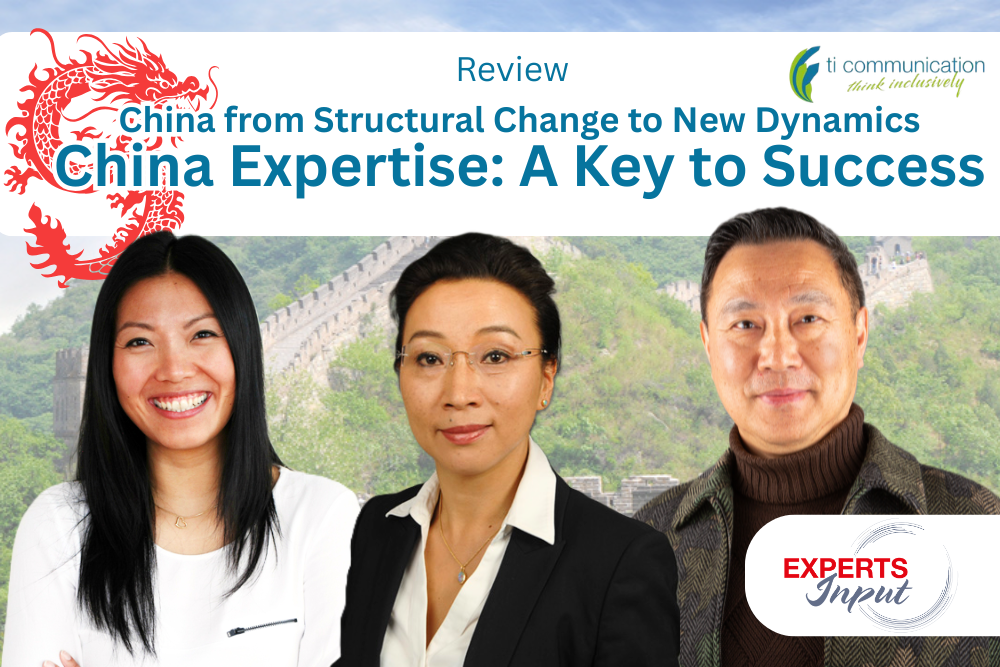
Review of the Virtual Event “Experts Input China – From Structural Change to New Dynamics”
Economic and geopolitical changes are currently preoccupying companies worldwide—especially regarding (expanded) cooperation with China. The focus was on how companies can understand the profound changes in China and develop concrete strategies for international cooperation based on this understanding.
Instead of purely theoretical market analyses, the event centered on real-world experiences in intercultural cooperation, leadership, communication, and strategic positioning. It quickly became clear: China expertise today means far more than market knowledge or language proficiency. Successful cooperation requires cultural sensitivity, strategic adaptability, and a deep understanding of the dynamics of Chinese business structures. And: what it means when this preparation has not been invested in and troubleshooting must be employed.
Particularly fascinating was the breakout session led by Xueli Yuan, who described contemporary China through the lens of three generations—or “three different Chinas.”
The older generation of 60- to 70-year-olds is strongly shaped by traditional values. Hierarchies, long-term relationships, and traditional social roles play a central role here. However, this generation is increasingly less represented in the active business world today.
The generation of 50- to 60-year-olds was strongly shaped by the socialist system. It accounts for about 30 percent of the Chinese workforce and is particularly represented in leadership and executive positions. Values such as stability, loyalty, and clear structures often characterize their leadership style and decision-making processes.
Today, the younger generation under the age of 35 makes up about 70 percent of the Chinese workforce—and thus also constitutes the majority of European companies’ contacts with Chinese partners. This generation has been described as young, dynamic, open-minded, direct, and innovation-oriented. Especially in international business, their communication and work styles are often significantly more modern than many European companies would expect.
This assessment impressively highlighted just how important nuanced expertise on China has become. Anyone who views “China” as a homogeneous culture runs the risk of misinterpreting communication patterns and expectations.
Another key highlight of the program was Nora Sun’s session on Chinese meeting and decision-making culture. The focus was on how to foster a sense of commitment in German-Chinese and Austrian-Chinese meetings.
Particularly interesting was the insight that decisions are often made in a multidimensional way. While in many European companies decisions are often formulated directly and clearly within a meeting, in China additional factors frequently play a role—such as relationships, hierarchies, informal consultations, or the situational context.
Our EXPERT emphasized that international teams, in particular, need to learn to take the respective context more into account. Commitment often arises not solely from a spoken “yes,” but from the overall picture comprising the relationship level, coordination processes, and mutual trust.
Xiang Hong’s session also took a practical approach. Using current examples from two companies, she highlighted typical challenges in day-to-day European-Chinese business.
A key takeaway: Companies often cut corners when preparing for international collaborations—whether in intercultural training, communication structures, or managing expectations. The result is misunderstandings and crisis situations that require intervention at short notice and under high pressure.
It became particularly clear that many conflicts do not arise from a lack of professional competence, but from differing communication patterns and a lack of cultural translation between partners. Preventive preparation was therefore highlighted as a decisive factor for success.
The virtual event vividly demonstrated the extent to which China is currently transforming: moving away from its traditional role as a manufacturing hub toward an innovation-driven economic region with a growing technological identity and new geopolitical ambitions.
Above all, however, the event showed that successful collaboration with Chinese partners today requires a nuanced understanding of social and generational changes. Companies must learn to view cultural differences not as an obstacle, but as a strategic success factor.
It became particularly clear for companies operating internationally: China expertise is increasingly becoming a key competency for the future.
You can find more about our China offerings here. Or, better yet, contact us directly right away.


Related posts

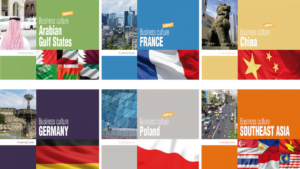
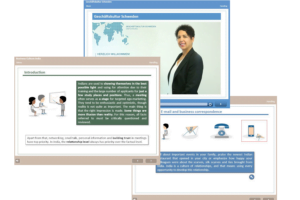
With our more than 30 innovative e-learning courses to date, you’ll become fit for intercultural business situations. You and your employees control your own learning process – just the way you need it: Where, when and for as long as you like! Become familiar with the most important cultural business peculiarities of a country, in order to “survive” intercultural business situations.
In contrast to the traditional waterfall method of change management, the agile route assumes that change is possible everywhere in the system. Along this route, teams and their development are especially important as sites for change. In this regard, learning nuggets represent a significant component to agile and thus autonomous learning. Short videos, brief study units, our Cultural Navigator as prework, e-learning sessions, topic-specific apps, guided lunch & learn units or numerous other flexible and spontaneously employable tools can be used as an alternate or enhancement to various topics. You will find several learning nuggets in our portfolio. In addition, we delight in the chance to develop new ones with you, in order to structure agile and thus sustainable learning in your enterprise.
We’d be happy to take the time to tell you about our learning nuggets or develop some with you.
In our workshops, you can develop your goals, spheres of activity and strategies with our guidance. Our moderators provide a supportive atmosphere and lend a temporal and content-based structure to your topics. That means you can work out your topics quickly and in a practical and target-oriented manner. The expertise of each individual team member is the hub of this activity. We make use of this expertise through methods in which cooperative work is supported. The narrow focus on one specific topic in a precisely defined time period enables concentrated and success-oriented work.
Get in touch with us, and we’ll develop the right workshop for your objectives.
Most of the learning process – studies cite approximately 70% - happens during the normal work day. Self-directed learning thus becomes the most important component of learning in an enterprise. In order to do justice to this circumstance, there is no way around moving from “prepackaged learning” to agile learning formats. This modern approach can be organized very well with several combinable tools and methods. Learning thus becomes sustainable and is no longer reduced to the simple memorization of facts. ti communication has always viewed training as a part of a process and not as a singular event. Now we are even greater advocates than ever of developing the space and opportunities for learners in an enterprise to educate themselves. We are happy to advise HR and PE staff along this path and ready to support teams and managers with concrete learning nuggets, tools, e-learning courses, etc.
We’ll bring your learning processes to life. Just talk to us and see for yourself.
Processes represent the nervous system of an enterprise. Structures keep those processes grounded. In the complex environment of companies, the ability to make decisions and speed at which they are made play a decisive role in success. We will develop processes and structures with you that will increase efficiency and decrease transaction costs. Interfaces become seamless sources of continual improvement. Together, internal processes are clarified, whether they be innovation, administrative, sales or control processes. Tasks, roles and goals are defined and measured. Understanding internal and external customers and supplier relationships bolsters this continual improvement process. Measuring the results gives employees feedback on their own efficiency and that of the team.
To find out if our solutions will work for you, click here to arrange a brief conversation.
Our virtual short seminars give you initial fundamental information. In these virtual sessions, lasting no more than two hours, we can sensitize you to the basics or peculiarities of selected topics or countries. Each of these virtual short seminars ends with a final question round, in which a few questions can be asked and answered about the topic. This format is ideal for pairing basic information with brief opportunities to pose questions.
To find out if our solutions will work for you, click here to arrange a brief conversation.
Our virtual training will open up the world to you. The combination of compact knowledge transfer, a personal relationship to the trainer, practical exercises and the development of concrete transfer strategies are what makes our training sessions unique. Our experienced senior trainers are able to create a stimulating learning atmosphere, even in a virtual space, and to capture the interest of participants through an extremely interactive structure.
Your advantages:
To find out if our solutions will work for you, click here to arrange a brief conversation.
Our training opens up the world to you with compact knowledge transfer and a personal relationship to your trainer. There are topics and developments that are best treated in a face-to-face format. Especially those training units that are strongly focused on exercises and trying things out can be more easily and spontaneously implemented in person. Face-to-face training promotes networking between participants to a greater degree. Particularly in breaks spent with each other, there are opportunities to exchange ideas which are not insignificant. Face-to-face training lives on the interactive structure and the dynamic of being able to address participant questions in a more individual and targeted manner and the ability to create a beneficial learning atmosphere. Classic face-to-face training, however, is not necessarily the measure of all things. From our point of view, it is especially the combination of face-to-face elements with other digital components which boosts the learning process immensely.
Develop the personalities of your best people in a targeted manner with coaching. Our coaching sessions are dedicated to the holistic further development of selected employees with regard to current or expected challenges in teams locally or internationally. Tailored to their respective needs, our experienced coaches work together with clients to identify strengths and deficits and cultivate personal goals and implementation strategies in order to improve basic key qualifications, leadership style, time management, creativity or presentation techniques. In doing so, where needed, we implement proven methods of personnel assessment and leadership development.
To find out if our solutions will work for you, click here to arrange a brief conversation.
We engage our moderators in seminars and conferences, in organizational development, in congresses and conventions, in meetings and in project and quality management. The objective is always to develop a common learning process. Moderation facilitates successful process control, the securing of concrete results and professional conflict resolution. Skilled employees and managers can then more easily work together, even with participants from other cultures, to set goals, develop strategies or design products. Our experienced, interculturally competent and neutral moderators ensure a professional, collaborative and goal-oriented work process, thus taking the burden off of your accountable employees.
To find out if our solutions will work for you, click here to arrange a brief conversation.