Attract international talent. Take on Responsibility.
12. August 2026
Europe's labour market is becoming increasingly international. Demographic change is fundamentally reshaping labour markets and leading to an unprecedented demand...


The True Cost of an Unfilled Skilled Position
29. July 2026
ti communication – a successful year of intercultural support within the PAM project
31. August 2026The True Cost of an Unfilled Skilled Position
29. July 2026ti communication – a successful year of intercultural support within the PAM project
31. August 2026Europe’s labour market is becoming increasingly international. Demographic change is fundamentally reshaping labour markets and leading to an unprecedented demand for skilled professionals. To address these shortages, companies are increasingly recruiting talent internationally.
As international recruitment continues to grow, one question becomes increasingly important: How does the migration of skilled professionals affect their countries of origin?
Europe's labour market is becoming increasingly international. Demographic change is fundamentally reshaping labour markets and leading to an unprecedented demand for skilled professionals. To address these shortages, companies are increasingly recruiting talent internationally.
As international recruitment continues to grow, one question becomes increasingly important: How does the migration of skilled professionals affect their countries of origin?
When highly qualified professionals permanently leave their home country, resulting in a shortage of critical expertise in their country of origin, this phenomenon is known as Brain-drain.
Brain-drain refers to the permanent emigration of highly educated professionals from a country or region. It´s particularly relevant in professions that are essential to economic and social development, such as healthcare, engineering, and information technology.
This creates tension. Destination countries benefit from the knowledge, experience, and innovation that international professionals bring. At the same time countries of origin may face significant challenges if they lose qualified workers in sectors that are already under pressure.
However, it’s important to distinguish between international mobility and brain drain. , The term applies only when emigration leads to a sustained loss of urgently needed expertise and negatively impacts the development of the country of origin.
The discussion around international talent mobility extends beyond brain drain. Researchers commonly distinguish between three related concepts: Brain-drain, Brain-gain, and Brain-circulation.
Brain-gain describes the economic and social benefits destination countries experience through the immigration of qualified professionals. Brain-circulation, on the other hand, emphasizes the exchange of knowledge and skills across national borders - for example, when professionals return to their countries of origin, start businesses, or pass on their expertise.
International mobility is therefore not necessarily associated with a loss for countries of origin. What matters is how it is structured and whether all parties involved can benefit in the long term.
The international recruitment of nursing professionals illustrates this challenge. Many countries actively recruit nursing professionals from abroad to address growing workforce shortages. At the same time, numerous countries of origin face significant challenges in their own healthcare systems and are losing valuable skilled workers due to emigration. The World Health Organization (WHO) estimates that by 2030, there could be a global shortage of approximately 10 million healthcare workers, particularly in low- and middle-income countries (National health workforce accounts: health workforce levels and trends 2026).
International recruitment is about much more than just filling vacancies. It involves responsibility toward skilled professionals, employers, and countries of origin alike. Therefore, the focus should not be solely on attracting qualified talent, but on ensuring that the entire process is conducted in a fair and sustainable manner.
This includes transparent communication, realistic expectations, the recognition of qualifications, and long-term integration and development prospects. International professionals are not a short-term solution to staffing shortages.
At ti communication, we see international talent acquisition as much more than recruitment. We support companies throughout the entire talent journey—from the initial Readiness Check and Matching process to Onboarding and Long-Term Integration.
Our objective is not simply to fill open positions, but to create sustainable partnerships that enable international professionals and organizations to succeed together.
Looking for Sustainable International Recruitment?
If your organization is looking to attract international professionals and fill critical positions responsibly, we would be happy to support you.
Together, we help build international teams that create long-term value—for your company, for skilled professionals, and for society.
Authors: Gerhard Hain and Pia Schmauser
Facing vacancies? No international recruitment or talent retention strategy (yet)? Find out more about international talents solutions here—or simply get in touch with us directly!



Related posts

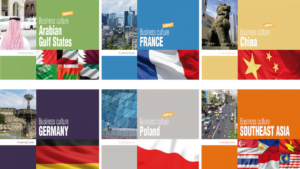
With our more than 30 innovative e-learning courses to date, you’ll become fit for intercultural business situations. You and your employees control your own learning process – just the way you need it: Where, when and for as long as you like! Become familiar with the most important cultural business peculiarities of a country, in order to “survive” intercultural business situations.
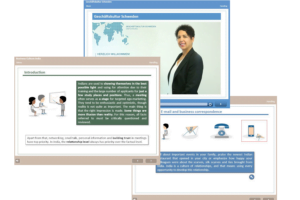
In contrast to the traditional waterfall method of change management, the agile route assumes that change is possible everywhere in the system. Along this route, teams and their development are especially important as sites for change. In this regard, learning nuggets represent a significant component to agile and thus autonomous learning. Short videos, brief study units, our Cultural Navigator as prework, e-learning sessions, topic-specific apps, guided lunch & learn units or numerous other flexible and spontaneously employable tools can be used as an alternate or enhancement to various topics. You will find several learning nuggets in our portfolio. In addition, we delight in the chance to develop new ones with you, in order to structure agile and thus sustainable learning in your enterprise.
We’d be happy to take the time to tell you about our learning nuggets or develop some with you.
In our workshops, you can develop your goals, spheres of activity and strategies with our guidance. Our moderators provide a supportive atmosphere and lend a temporal and content-based structure to your topics. That means you can work out your topics quickly and in a practical and target-oriented manner. The expertise of each individual team member is the hub of this activity. We make use of this expertise through methods in which cooperative work is supported. The narrow focus on one specific topic in a precisely defined time period enables concentrated and success-oriented work.
Get in touch with us, and we’ll develop the right workshop for your objectives.
Most of the learning process – studies cite approximately 70% - happens during the normal work day. Self-directed learning thus becomes the most important component of learning in an enterprise. In order to do justice to this circumstance, there is no way around moving from “prepackaged learning” to agile learning formats. This modern approach can be organized very well with several combinable tools and methods. Learning thus becomes sustainable and is no longer reduced to the simple memorization of facts. ti communication has always viewed training as a part of a process and not as a singular event. Now we are even greater advocates than ever of developing the space and opportunities for learners in an enterprise to educate themselves. We are happy to advise HR and PE staff along this path and ready to support teams and managers with concrete learning nuggets, tools, e-learning courses, etc.
We’ll bring your learning processes to life. Just talk to us and see for yourself.
Processes represent the nervous system of an enterprise. Structures keep those processes grounded. In the complex environment of companies, the ability to make decisions and speed at which they are made play a decisive role in success. We will develop processes and structures with you that will increase efficiency and decrease transaction costs. Interfaces become seamless sources of continual improvement. Together, internal processes are clarified, whether they be innovation, administrative, sales or control processes. Tasks, roles and goals are defined and measured. Understanding internal and external customers and supplier relationships bolsters this continual improvement process. Measuring the results gives employees feedback on their own efficiency and that of the team.
To find out if our solutions will work for you, click here to arrange a brief conversation.
Our virtual short seminars give you initial fundamental information. In these virtual sessions, lasting no more than two hours, we can sensitize you to the basics or peculiarities of selected topics or countries. Each of these virtual short seminars ends with a final question round, in which a few questions can be asked and answered about the topic. This format is ideal for pairing basic information with brief opportunities to pose questions.
To find out if our solutions will work for you, click here to arrange a brief conversation.
Our virtual training will open up the world to you. The combination of compact knowledge transfer, a personal relationship to the trainer, practical exercises and the development of concrete transfer strategies are what makes our training sessions unique. Our experienced senior trainers are able to create a stimulating learning atmosphere, even in a virtual space, and to capture the interest of participants through an extremely interactive structure.
Your advantages:
To find out if our solutions will work for you, click here to arrange a brief conversation.
Our training opens up the world to you with compact knowledge transfer and a personal relationship to your trainer. There are topics and developments that are best treated in a face-to-face format. Especially those training units that are strongly focused on exercises and trying things out can be more easily and spontaneously implemented in person. Face-to-face training promotes networking between participants to a greater degree. Particularly in breaks spent with each other, there are opportunities to exchange ideas which are not insignificant. Face-to-face training lives on the interactive structure and the dynamic of being able to address participant questions in a more individual and targeted manner and the ability to create a beneficial learning atmosphere. Classic face-to-face training, however, is not necessarily the measure of all things. From our point of view, it is especially the combination of face-to-face elements with other digital components which boosts the learning process immensely.
Develop the personalities of your best people in a targeted manner with coaching. Our coaching sessions are dedicated to the holistic further development of selected employees with regard to current or expected challenges in teams locally or internationally. Tailored to their respective needs, our experienced coaches work together with clients to identify strengths and deficits and cultivate personal goals and implementation strategies in order to improve basic key qualifications, leadership style, time management, creativity or presentation techniques. In doing so, where needed, we implement proven methods of personnel assessment and leadership development.
To find out if our solutions will work for you, click here to arrange a brief conversation.
We engage our moderators in seminars and conferences, in organizational development, in congresses and conventions, in meetings and in project and quality management. The objective is always to develop a common learning process. Moderation facilitates successful process control, the securing of concrete results and professional conflict resolution. Skilled employees and managers can then more easily work together, even with participants from other cultures, to set goals, develop strategies or design products. Our experienced, interculturally competent and neutral moderators ensure a professional, collaborative and goal-oriented work process, thus taking the burden off of your accountable employees.
To find out if our solutions will work for you, click here to arrange a brief conversation.