
China in Transition: Why China Expertise Is More Important Today Than Ever
11. May 2026
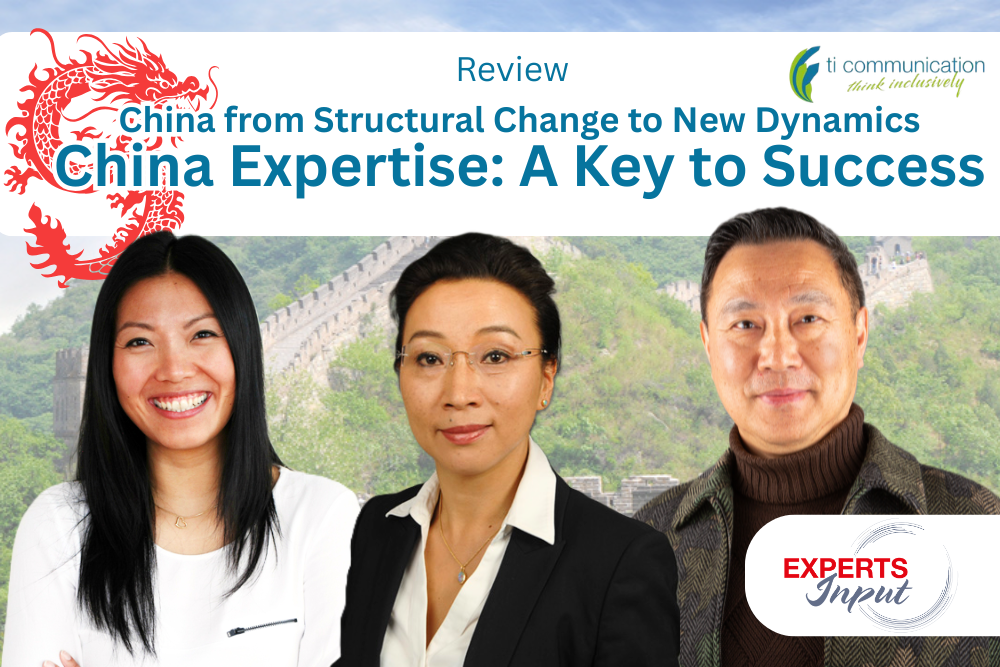
Review of the Virtual Event “Experts Input China – From Structural Change to New Dynamics”

Top results – happy customers!
10. March 2026
Future Plans & Team Spirit: A Day at the Idea Factory
16. March 2026Top results – happy customers!
10. March 2026Future Plans & Team Spirit: A Day at the Idea Factory
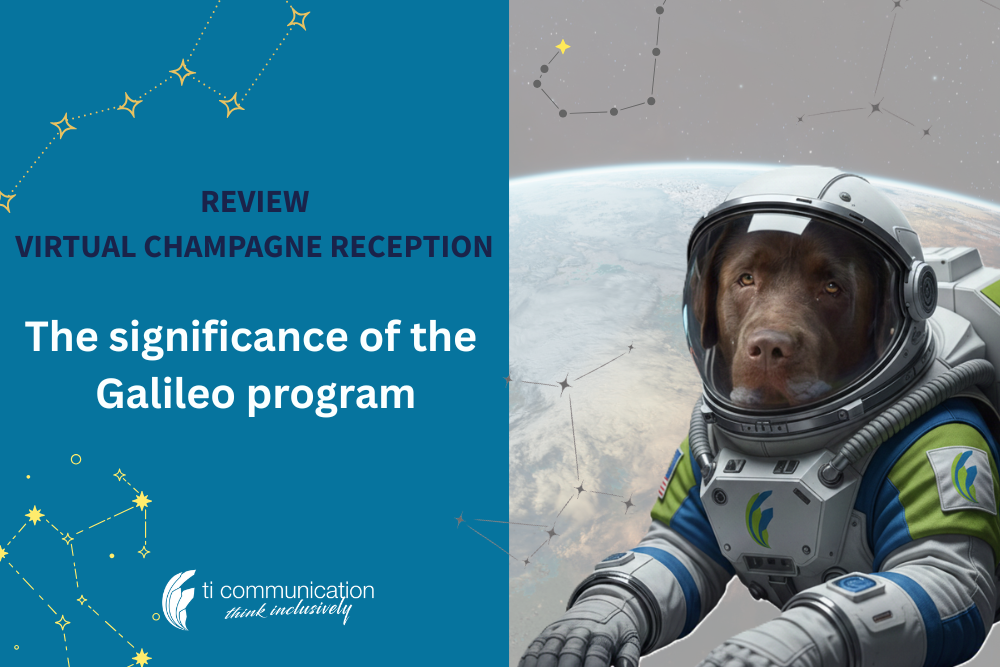
16. March 2026Woof. Major Carlo here. Office dog, lunch break security officer, and now also space correspondent.
The other day, I got to attend an event that took us high up—around 23,000 kilometers above our heads, to be precise. The topic of the evening: Galileo – Europe’s own navigation system. And I tell you, it was more exciting than any squirrel chase. Rolf Kozlowski, Managing Director of DLR GfR mbH, took us on an impressively exciting journey into orbit and back to Earth! It was almost like a taste of spacewalking.
Woof. Major Carlo here. Office dog, lunch break security officer, and now also space correspondent.
The other day, I got to attend an event that took us high up—around 23,000 kilometers above our heads, to be precise. The topic of the evening: Galileo – Europe's own navigation system. And I tell you, it was more exciting than any squirrel chase. Rolf Kozlowski, Managing Director of DLR GfR mbH, took us on an impressively exciting journey into orbit and back to Earth! It was almost like a taste of spacewalking.
When people think of Galileo, many first think of navigation. In other words, where the boss parked the car or how to get to the nearest pet food store without any detours. In addition to determining location, the system provides extremely precise time information. And believe me—time is not only important for walking the dog or feeding.
At first, I thought “jamming” meant stealing jam. Wrong. It means deliberately disrupting signals. And “spoofing” means sending false signals that mislead recipients.
This can have dramatic consequences for aircraft or trains. That's exactly why an independent European system is so important. If you rely exclusively on others, you relinquish a degree of control.
Galileo has a lot in common with rescue dogs: among other things, it has a special search-and-rescue service. Okay, maybe the technology behind it is a little more sophisticated than a sniffer dog, but I would never admit that publicly *woof*
When an emergency signal is triggered anywhere in the world, the system organizes help – directly via satellite. I think that's true teamwork. And as a dog, I know that good teams always save each other's noses when in doubt.
Before a Galileo satellite is launched, it undergoes three quarters of a year to a year of preparation. Sometimes, several are launched at the same time. Up there, around 23,000 kilometers above the Earth, they then orbit for a lifetime of around twelve years.
Rockets are also launched in Kiruna in the far north. I have learned that Europe has many spaceport locations—even in remote outlying areas of the EU.
The only problem arises when a satellite can no longer be controlled—for example, due to a meteorite impact. In this case, special safety protocols and considerations come into play.
Galileo is considered one of the most accurate navigation systems in the world. And yet Europe sometimes makes itself smaller than it is.
With projects such as IRIS², Europe is trying to become more independent – a secure communications infrastructure in response to global developments. No, it won't be like the pace set by Elon Musk and his mega-constellations. But it is a strategic move.
And this is where politics comes into play: the European Commission provides impetus, the European Parliament approves the funds. Anyone who wants to strengthen European interests must also be represented there. In the best case scenario, European interests should take precedence over national sensitivities. Woof – that sounds like a dogged plan!
I am a dog. And with my keen sense of smell, I have detected the following:
Galileo shows what is possible when we all look in the same direction – or in my case, look up together. And especially when communication between multinational teams in different locations works smoothly.
Now, if you'll excuse me,
I urgently need to check whether satellites can also locate treats.



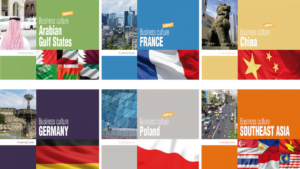
With our more than 30 innovative e-learning courses to date, you’ll become fit for intercultural business situations. You and your employees control your own learning process – just the way you need it: Where, when and for as long as you like! Become familiar with the most important cultural business peculiarities of a country, in order to “survive” intercultural business situations.
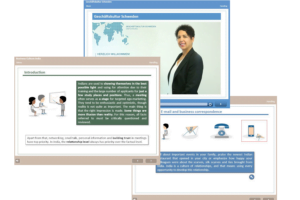
In contrast to the traditional waterfall method of change management, the agile route assumes that change is possible everywhere in the system. Along this route, teams and their development are especially important as sites for change. In this regard, learning nuggets represent a significant component to agile and thus autonomous learning. Short videos, brief study units, our Cultural Navigator as prework, e-learning sessions, topic-specific apps, guided lunch & learn units or numerous other flexible and spontaneously employable tools can be used as an alternate or enhancement to various topics. You will find several learning nuggets in our portfolio. In addition, we delight in the chance to develop new ones with you, in order to structure agile and thus sustainable learning in your enterprise.
We’d be happy to take the time to tell you about our learning nuggets or develop some with you.
In our workshops, you can develop your goals, spheres of activity and strategies with our guidance. Our moderators provide a supportive atmosphere and lend a temporal and content-based structure to your topics. That means you can work out your topics quickly and in a practical and target-oriented manner. The expertise of each individual team member is the hub of this activity. We make use of this expertise through methods in which cooperative work is supported. The narrow focus on one specific topic in a precisely defined time period enables concentrated and success-oriented work.
Get in touch with us, and we’ll develop the right workshop for your objectives.
Most of the learning process – studies cite approximately 70% - happens during the normal work day. Self-directed learning thus becomes the most important component of learning in an enterprise. In order to do justice to this circumstance, there is no way around moving from “prepackaged learning” to agile learning formats. This modern approach can be organized very well with several combinable tools and methods. Learning thus becomes sustainable and is no longer reduced to the simple memorization of facts. ti communication has always viewed training as a part of a process and not as a singular event. Now we are even greater advocates than ever of developing the space and opportunities for learners in an enterprise to educate themselves. We are happy to advise HR and PE staff along this path and ready to support teams and managers with concrete learning nuggets, tools, e-learning courses, etc.
We’ll bring your learning processes to life. Just talk to us and see for yourself.
Processes represent the nervous system of an enterprise. Structures keep those processes grounded. In the complex environment of companies, the ability to make decisions and speed at which they are made play a decisive role in success. We will develop processes and structures with you that will increase efficiency and decrease transaction costs. Interfaces become seamless sources of continual improvement. Together, internal processes are clarified, whether they be innovation, administrative, sales or control processes. Tasks, roles and goals are defined and measured. Understanding internal and external customers and supplier relationships bolsters this continual improvement process. Measuring the results gives employees feedback on their own efficiency and that of the team.
To find out if our solutions will work for you, click here to arrange a brief conversation.
Our virtual short seminars give you initial fundamental information. In these virtual sessions, lasting no more than two hours, we can sensitize you to the basics or peculiarities of selected topics or countries. Each of these virtual short seminars ends with a final question round, in which a few questions can be asked and answered about the topic. This format is ideal for pairing basic information with brief opportunities to pose questions.
To find out if our solutions will work for you, click here to arrange a brief conversation.
Our virtual training will open up the world to you. The combination of compact knowledge transfer, a personal relationship to the trainer, practical exercises and the development of concrete transfer strategies are what makes our training sessions unique. Our experienced senior trainers are able to create a stimulating learning atmosphere, even in a virtual space, and to capture the interest of participants through an extremely interactive structure.
Your advantages:
To find out if our solutions will work for you, click here to arrange a brief conversation.
Our training opens up the world to you with compact knowledge transfer and a personal relationship to your trainer. There are topics and developments that are best treated in a face-to-face format. Especially those training units that are strongly focused on exercises and trying things out can be more easily and spontaneously implemented in person. Face-to-face training promotes networking between participants to a greater degree. Particularly in breaks spent with each other, there are opportunities to exchange ideas which are not insignificant. Face-to-face training lives on the interactive structure and the dynamic of being able to address participant questions in a more individual and targeted manner and the ability to create a beneficial learning atmosphere. Classic face-to-face training, however, is not necessarily the measure of all things. From our point of view, it is especially the combination of face-to-face elements with other digital components which boosts the learning process immensely.
Develop the personalities of your best people in a targeted manner with coaching. Our coaching sessions are dedicated to the holistic further development of selected employees with regard to current or expected challenges in teams locally or internationally. Tailored to their respective needs, our experienced coaches work together with clients to identify strengths and deficits and cultivate personal goals and implementation strategies in order to improve basic key qualifications, leadership style, time management, creativity or presentation techniques. In doing so, where needed, we implement proven methods of personnel assessment and leadership development.
To find out if our solutions will work for you, click here to arrange a brief conversation.
We engage our moderators in seminars and conferences, in organizational development, in congresses and conventions, in meetings and in project and quality management. The objective is always to develop a common learning process. Moderation facilitates successful process control, the securing of concrete results and professional conflict resolution. Skilled employees and managers can then more easily work together, even with participants from other cultures, to set goals, develop strategies or design products. Our experienced, interculturally competent and neutral moderators ensure a professional, collaborative and goal-oriented work process, thus taking the burden off of your accountable employees.
To find out if our solutions will work for you, click here to arrange a brief conversation.