Winter celebrations at a glance – looking beyond Christmas
15. December 2025
When the days get shorter, it gets colder outside and warm lights illuminate streets and interiors, a special time of...


When the days get shorter, it gets colder outside and warm lights illuminate streets and interiors, a special time of togetherness begins for many people. For some people, winter means “celebrating Christmas”. But this festival is by no means celebrated in all cultural contexts.
When the days get shorter, it gets colder outside and warm lights illuminate streets and interiors, a special time of togetherness begins for many people. For some people, winter means "celebrating Christmas". But this festival is by no means celebrated in all cultural contexts. All over the world, diverse traditions and festivals give winter a very special meaning. This blog post invites you to get to know and discover a small selection of the diversity of winter festivals around the world. It is also about understanding what connects people around the globe during this special time.
Christmas, which is celebrated on either 24 or 25 December, is the best-known winter festival, especially for people in Western cultural contexts, and is strongly rooted in culture and society. It commemorates the birth of Jesus in Christianity. Typical traditions include decorating the Christmas tree, lighting candles, sharing a festive meal and exchanging gifts. Light in particular symbolizes hope and warmth in the dark season.
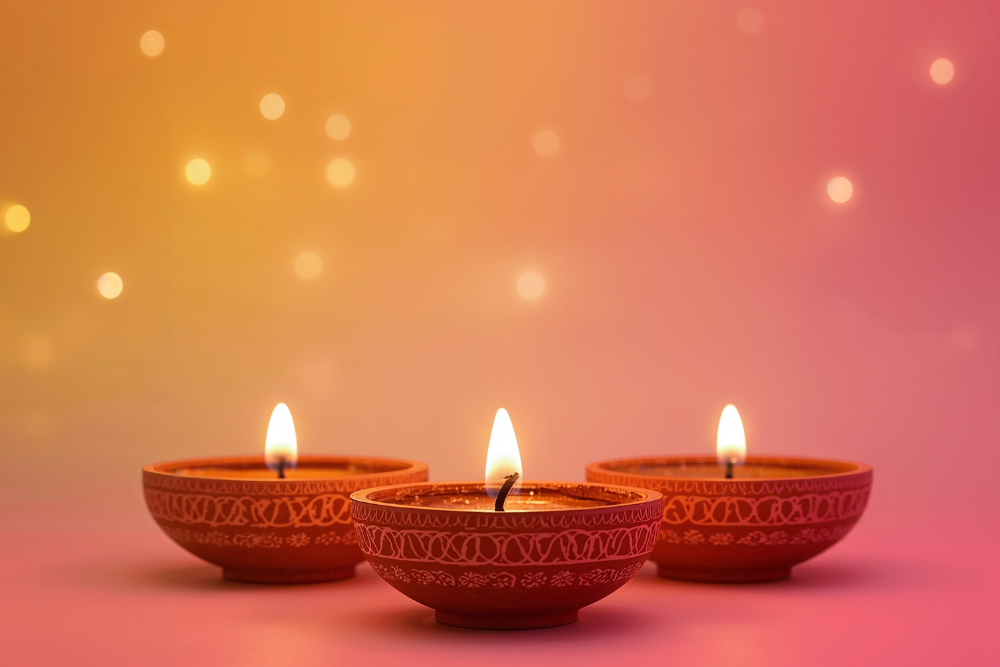
While in some parts of the world winter begins with cold and darkness, people in South Asia celebrate Diwali, a colorful festival of lights, which takes place on a new moon night in late autumn and can last up to five days. At the heart of this Hindu festival of lights is the victory of good over evil, the renewal of life and the overcoming of darkness by divine light. It therefore marks a spiritual new beginning, similar to other cultural festivals that take place around the world during the winter season. Numerous lights illuminate houses, temples, streets and gardens. Prayer ceremonies are performed, fireworks are set, people cook and eat together and share gifts. Diwali is therefore an extremely joyful festival and, in terms of its religious and cultural significance for Hindus and also for secular people living in the Hindu cultural sphere, it is comparable to the significance of Christmas in the Western world.
The symbol of light also plays a central role in the Jewish festival of lights, Hanukkah. Jewish people celebrate this festival to commemorate an important event in Jewish history. From the 4th century BC onwards, the Jews in Judea lived under Hellenistic rule, during which the king attempted to ban the practice of the Jewish religion. In the second century BC, the Jews revolted against this rule, eventually recaptured Jerusalem and established an independent Jewish state. According to legend, when the Jews were cleaning up a desecrated, recaptured temple, they found only a single unopened vessel of ritually pure oil to light the lamps – enough for one day.
Nevertheless, the candlestick in the temple burned for eight days, exactly as long as it took to produce new consecrated oil. That is why Hanukkah (hanukkat habajit = dedication of the temple) is celebrated for eight days. The Chanukiah is a nine-branched candlestick that commemorates the miracle described above. Each evening, another candle is lit until all eight lights – lit with the ninth, the shamash – shine. On Hanukkah, people like to play "dreidel", which is the name of a four-sided spinning top whose Hebrew letters commemorate the miracle of the oil jug (see the figure below). In the dreidel game, players place small tokens and win or lose depending on the letter that lands on top after the dreidel spins. The festival of Hanukkah, commemorating the resistance against religious oppression, is a symbol of cultural and spiritual renewal and of God's providence.

Donghzi is an East Asian winter festival that is relatively unknown in Europe. It is rooted in Chinese philosophy as well as natural cosmology, particularly the yin-yang principle and the cyclical change of the seasons. Therefore it falls on the winter solstice. The name means 'arrival of winter'. The festival is one of the oldest and most important traditional festivals in China and is also celebrated in various forms in Taiwan, Japan, Korea and Vietnam. The symbol of light also plays an important role in this festival, as it represents the return of light. From this day onwards, when the night is longest and the day is shortest, the days become longer again, symbolizing the return of light, growth and new beginnings. On this day, families come together, prepare traditional dishes and eat together. In southern China, for example, sweet glutinous rice balls (tangyuan) are eaten, while in northern China dumplings (jiaozi) are eaten. The winter solstice thus marks the beginning of longer days, and family gatherings symbolize hope, warmth and continuity.

Winter festivals across cultures, whether celebrated in cold, dark climates or warm, dry ones, reflect universal human needs. They offer orientation during times of transition, create intentional moments of pause, and strengthen social bonds. Despite their diverse expressions, these celebrations share core elements such as light, community, and hope. Rituals like lighting candles, sharing traditional meals, telling stories, or holding festive ceremonies provide comfort and symbolize the overcoming of spiritual, symbolic, or seasonal challenges.
At the same time, these festivals serve as anchors of cultural identity. They make traditions tangible, structure the rhythm of the year, and convey values across generations. Even in a globally mobile world, rituals retain their meaning: they travel with people, adapt to new contexts, and continue to foster a sense of belonging while enabling intercultural exchange.
Knowledge about the festivals of other cultural contexts opens up new perspectives and can prevent misunderstandings. Those who know the meaning behind a particular cultural festival, have a better understanding of why colleagues take time off work, families get together or certain rituals are observed. Such knowledge promotes empathy and mutual respect, which are two foundations for successful social coexistence. An invitation to a Hanukkah celebration, for example, means not only learning about candles, “dreidels” and food, but also recognizing how important this festival is for Jewish families. Likewise, it creates appreciation to consider the holidays of other religions or cultures in calendars and work schedules. Those who recognize diversity understand that celebrations can build bridges, for example between neighbors, colleagues and cultures.This broader perspective encourages us to remain curious, ask questions and discover the beauty of other traditions. Because every holiday, whether big or small, familiar or new, reminds us of what connects us: Light, warmth and community.




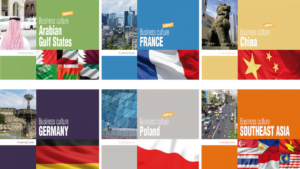
With our more than 30 innovative e-learning courses to date, you’ll become fit for intercultural business situations. You and your employees control your own learning process – just the way you need it: Where, when and for as long as you like! Become familiar with the most important cultural business peculiarities of a country, in order to “survive” intercultural business situations.
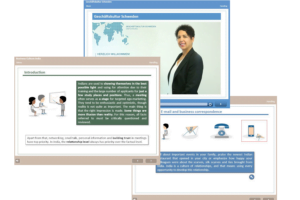
In contrast to the traditional waterfall method of change management, the agile route assumes that change is possible everywhere in the system. Along this route, teams and their development are especially important as sites for change. In this regard, learning nuggets represent a significant component to agile and thus autonomous learning. Short videos, brief study units, our Cultural Navigator as prework, e-learning sessions, topic-specific apps, guided lunch & learn units or numerous other flexible and spontaneously employable tools can be used as an alternate or enhancement to various topics. You will find several learning nuggets in our portfolio. In addition, we delight in the chance to develop new ones with you, in order to structure agile and thus sustainable learning in your enterprise.
We’d be happy to take the time to tell you about our learning nuggets or develop some with you.
In our workshops, you can develop your goals, spheres of activity and strategies with our guidance. Our moderators provide a supportive atmosphere and lend a temporal and content-based structure to your topics. That means you can work out your topics quickly and in a practical and target-oriented manner. The expertise of each individual team member is the hub of this activity. We make use of this expertise through methods in which cooperative work is supported. The narrow focus on one specific topic in a precisely defined time period enables concentrated and success-oriented work.
Get in touch with us, and we’ll develop the right workshop for your objectives.
Most of the learning process – studies cite approximately 70% - happens during the normal work day. Self-directed learning thus becomes the most important component of learning in an enterprise. In order to do justice to this circumstance, there is no way around moving from “prepackaged learning” to agile learning formats. This modern approach can be organized very well with several combinable tools and methods. Learning thus becomes sustainable and is no longer reduced to the simple memorization of facts. ti communication has always viewed training as a part of a process and not as a singular event. Now we are even greater advocates than ever of developing the space and opportunities for learners in an enterprise to educate themselves. We are happy to advise HR and PE staff along this path and ready to support teams and managers with concrete learning nuggets, tools, e-learning courses, etc.
We’ll bring your learning processes to life. Just talk to us and see for yourself.
Processes represent the nervous system of an enterprise. Structures keep those processes grounded. In the complex environment of companies, the ability to make decisions and speed at which they are made play a decisive role in success. We will develop processes and structures with you that will increase efficiency and decrease transaction costs. Interfaces become seamless sources of continual improvement. Together, internal processes are clarified, whether they be innovation, administrative, sales or control processes. Tasks, roles and goals are defined and measured. Understanding internal and external customers and supplier relationships bolsters this continual improvement process. Measuring the results gives employees feedback on their own efficiency and that of the team.
To find out if our solutions will work for you, click here to arrange a brief conversation.
Our virtual short seminars give you initial fundamental information. In these virtual sessions, lasting no more than two hours, we can sensitize you to the basics or peculiarities of selected topics or countries. Each of these virtual short seminars ends with a final question round, in which a few questions can be asked and answered about the topic. This format is ideal for pairing basic information with brief opportunities to pose questions.
To find out if our solutions will work for you, click here to arrange a brief conversation.
Our virtual training will open up the world to you. The combination of compact knowledge transfer, a personal relationship to the trainer, practical exercises and the development of concrete transfer strategies are what makes our training sessions unique. Our experienced senior trainers are able to create a stimulating learning atmosphere, even in a virtual space, and to capture the interest of participants through an extremely interactive structure.
Your advantages:
To find out if our solutions will work for you, click here to arrange a brief conversation.
Our training opens up the world to you with compact knowledge transfer and a personal relationship to your trainer. There are topics and developments that are best treated in a face-to-face format. Especially those training units that are strongly focused on exercises and trying things out can be more easily and spontaneously implemented in person. Face-to-face training promotes networking between participants to a greater degree. Particularly in breaks spent with each other, there are opportunities to exchange ideas which are not insignificant. Face-to-face training lives on the interactive structure and the dynamic of being able to address participant questions in a more individual and targeted manner and the ability to create a beneficial learning atmosphere. Classic face-to-face training, however, is not necessarily the measure of all things. From our point of view, it is especially the combination of face-to-face elements with other digital components which boosts the learning process immensely.
Develop the personalities of your best people in a targeted manner with coaching. Our coaching sessions are dedicated to the holistic further development of selected employees with regard to current or expected challenges in teams locally or internationally. Tailored to their respective needs, our experienced coaches work together with clients to identify strengths and deficits and cultivate personal goals and implementation strategies in order to improve basic key qualifications, leadership style, time management, creativity or presentation techniques. In doing so, where needed, we implement proven methods of personnel assessment and leadership development.
To find out if our solutions will work for you, click here to arrange a brief conversation.
We engage our moderators in seminars and conferences, in organizational development, in congresses and conventions, in meetings and in project and quality management. The objective is always to develop a common learning process. Moderation facilitates successful process control, the securing of concrete results and professional conflict resolution. Skilled employees and managers can then more easily work together, even with participants from other cultures, to set goals, develop strategies or design products. Our experienced, interculturally competent and neutral moderators ensure a professional, collaborative and goal-oriented work process, thus taking the burden off of your accountable employees.
To find out if our solutions will work for you, click here to arrange a brief conversation.