Winter celebrations at a glance – looking beyond Christmas
15. December 2025
When the days get shorter, it gets colder outside and warm lights illuminate streets and interiors, a special time of...


In this blog post, our marketing intern Elina shares her interpretation of what “typical German” means and how she actually sees Germans after living in Germany for 2 years.
In this blog post, our marketing intern Elina shares her interpretation of what “typical German” means and how she actually sees Germans after living in Germany for 2 years.
“I guess everyone who moves to a new country forms a certain idea of the people living there. So, terms like “typical X” definitely have a right to exist. The only question is: to what extent do we allow these perceptions to influence how we interact with locals?
If I were to answer what “typical German” means to me, I would describe 4 scenarios that, in my opinion, shape this image:
The so-called reservedness and coldness that many internationals mention can indeed be noticed in professional settings. At work, Germans draw a clear line between business and private life. The main focus is on discussing the topic at hand and making a detailed plan to achieve a common goal, rather than building personal connections. Germans tend to plan meticulously and only start once they feel 100% prepared.
For internationals, making friends with Germans can sometimes be challenging, as they often prefer to stay within their established circles. If you’re not close friends yet, conversations usually revolve around shared topics like work or studies. Germans typically socialise by cooking together or meeting at a café or bar for a beer.
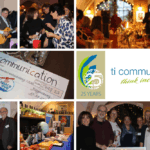
And then there are the true folk-festival enthusiasts. The Germans who cannot show up at the festival without their traditional clothes. The Germans for whom drinking five 1-litre glasses of beer at once is not a sign of alcoholism, but a way of preserving tradition. These Germans at the festival turn into the most talkative and merry nation I have met. They know almost every song played by the bands. The Germans who never dance in their lives suddenly break into a dance.
On a hike, however, Germans can be surprisingly friendly. In Bavaria, people greet every passerby with a cheerful “Servus” and easily start small talk. Their outfits tend to be quite similar – hiking shoes, a Jack Wolfskin jacket and pants, a headband, and sometimes trekking poles. Lunch is usually enjoyed at a “Gaststätte” up in the mountains.
Now you know the 4 scenarios that could embody “typical German” behaviour. BUT. Every scenario has its exceptions — and here are the ones I have personally experienced:
My German colleagues are extremely nice people. They are always willing to help and open to discussion. When they ask “Wie geht’s?”, they are genuinely interested in how I am doing. Yes, we do not automatically become friends, but I have noticed that many colleagues meet up after work. They go to concerts together or meet at cafés.
Almost all my friends here are Germans, and we can talk about anything. I am often amazed by how deep our conversations can be, even if we’re not the closest of friends. Evenings with Germans are usually relaxed. When they have free time, they truly embrace it — taking things slowly, enjoying a beer or a cappuccino. Yes, work or studies might come up, but they rarely dominate the conversation.
When it comes to folk festivals, I know Germans who don’t drink alcohol, don’t wear traditional clothes, and attend simply to meet their friends. I’ve also noticed that not everyone is cheerful at these events. There’s a darker side, too — festival grounds can sometimes turn into places where it’s apparently acceptable to use the open space as a toilet or to vomit.
As for hikes — I also know Germans who aren’t that enthusiastic about them. And should they join one, they look like they are going on a photo shoot in the mountains.
I believe there is a place for the concept of the “typical German”, and that it doesn’t necessarily have negative connotations. It simply helps to form an initial impression. The question is how open we are to broadening this image, contradicting it, and accepting the diversity of people and scenarios.”




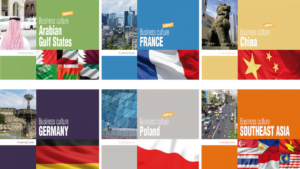
With our more than 30 innovative e-learning courses to date, you’ll become fit for intercultural business situations. You and your employees control your own learning process – just the way you need it: Where, when and for as long as you like! Become familiar with the most important cultural business peculiarities of a country, in order to “survive” intercultural business situations.
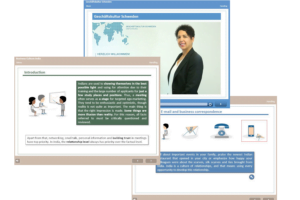
In contrast to the traditional waterfall method of change management, the agile route assumes that change is possible everywhere in the system. Along this route, teams and their development are especially important as sites for change. In this regard, learning nuggets represent a significant component to agile and thus autonomous learning. Short videos, brief study units, our Cultural Navigator as prework, e-learning sessions, topic-specific apps, guided lunch & learn units or numerous other flexible and spontaneously employable tools can be used as an alternate or enhancement to various topics. You will find several learning nuggets in our portfolio. In addition, we delight in the chance to develop new ones with you, in order to structure agile and thus sustainable learning in your enterprise.
We’d be happy to take the time to tell you about our learning nuggets or develop some with you.
In our workshops, you can develop your goals, spheres of activity and strategies with our guidance. Our moderators provide a supportive atmosphere and lend a temporal and content-based structure to your topics. That means you can work out your topics quickly and in a practical and target-oriented manner. The expertise of each individual team member is the hub of this activity. We make use of this expertise through methods in which cooperative work is supported. The narrow focus on one specific topic in a precisely defined time period enables concentrated and success-oriented work.
Get in touch with us, and we’ll develop the right workshop for your objectives.
Most of the learning process – studies cite approximately 70% - happens during the normal work day. Self-directed learning thus becomes the most important component of learning in an enterprise. In order to do justice to this circumstance, there is no way around moving from “prepackaged learning” to agile learning formats. This modern approach can be organized very well with several combinable tools and methods. Learning thus becomes sustainable and is no longer reduced to the simple memorization of facts. ti communication has always viewed training as a part of a process and not as a singular event. Now we are even greater advocates than ever of developing the space and opportunities for learners in an enterprise to educate themselves. We are happy to advise HR and PE staff along this path and ready to support teams and managers with concrete learning nuggets, tools, e-learning courses, etc.
We’ll bring your learning processes to life. Just talk to us and see for yourself.
Processes represent the nervous system of an enterprise. Structures keep those processes grounded. In the complex environment of companies, the ability to make decisions and speed at which they are made play a decisive role in success. We will develop processes and structures with you that will increase efficiency and decrease transaction costs. Interfaces become seamless sources of continual improvement. Together, internal processes are clarified, whether they be innovation, administrative, sales or control processes. Tasks, roles and goals are defined and measured. Understanding internal and external customers and supplier relationships bolsters this continual improvement process. Measuring the results gives employees feedback on their own efficiency and that of the team.
To find out if our solutions will work for you, click here to arrange a brief conversation.
Our virtual short seminars give you initial fundamental information. In these virtual sessions, lasting no more than two hours, we can sensitize you to the basics or peculiarities of selected topics or countries. Each of these virtual short seminars ends with a final question round, in which a few questions can be asked and answered about the topic. This format is ideal for pairing basic information with brief opportunities to pose questions.
To find out if our solutions will work for you, click here to arrange a brief conversation.
Our virtual training will open up the world to you. The combination of compact knowledge transfer, a personal relationship to the trainer, practical exercises and the development of concrete transfer strategies are what makes our training sessions unique. Our experienced senior trainers are able to create a stimulating learning atmosphere, even in a virtual space, and to capture the interest of participants through an extremely interactive structure.
Your advantages:
To find out if our solutions will work for you, click here to arrange a brief conversation.
Our training opens up the world to you with compact knowledge transfer and a personal relationship to your trainer. There are topics and developments that are best treated in a face-to-face format. Especially those training units that are strongly focused on exercises and trying things out can be more easily and spontaneously implemented in person. Face-to-face training promotes networking between participants to a greater degree. Particularly in breaks spent with each other, there are opportunities to exchange ideas which are not insignificant. Face-to-face training lives on the interactive structure and the dynamic of being able to address participant questions in a more individual and targeted manner and the ability to create a beneficial learning atmosphere. Classic face-to-face training, however, is not necessarily the measure of all things. From our point of view, it is especially the combination of face-to-face elements with other digital components which boosts the learning process immensely.
Develop the personalities of your best people in a targeted manner with coaching. Our coaching sessions are dedicated to the holistic further development of selected employees with regard to current or expected challenges in teams locally or internationally. Tailored to their respective needs, our experienced coaches work together with clients to identify strengths and deficits and cultivate personal goals and implementation strategies in order to improve basic key qualifications, leadership style, time management, creativity or presentation techniques. In doing so, where needed, we implement proven methods of personnel assessment and leadership development.
To find out if our solutions will work for you, click here to arrange a brief conversation.
We engage our moderators in seminars and conferences, in organizational development, in congresses and conventions, in meetings and in project and quality management. The objective is always to develop a common learning process. Moderation facilitates successful process control, the securing of concrete results and professional conflict resolution. Skilled employees and managers can then more easily work together, even with participants from other cultures, to set goals, develop strategies or design products. Our experienced, interculturally competent and neutral moderators ensure a professional, collaborative and goal-oriented work process, thus taking the burden off of your accountable employees.
To find out if our solutions will work for you, click here to arrange a brief conversation.